BMW 11241288386 Engine Piston Connecting Rod Set 2.5L
fits model: E30, E34, M20, 325, 525. make: Bmw. year: 1987–1993.
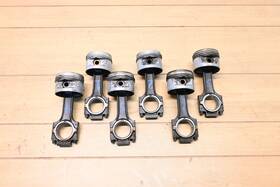
( Manufacturer Part Number: 11241288386 ), ( Part Type: Engine Piston Rod ), ( Manufacturer Warranty: 1 Month ), ( Country Of Origin: Germany )
Review BMW 2.5l Engine Piston Connecting Rod Set Of Oem fits E30 E34 M20 325 525 1987–1993
The **BMW 11241288386 OEM piston and connecting rod set** is a meticulously engineered aftermarket replacement designed to restore peak performance and longevity to the iconic **M20 2.5-liter inline-six engine** found in BMW s legendary **E30 325i, E34 525i, and select M20-equipped models** from **1987 through 1993**. Crafted to exacting specifications, this high-quality component set ensures a seamless fit and reliable operation, addressing common wear issues such as piston ring wear, rod bearing fatigue, or internal clearance degradation that can compromise engine efficiency, fuel economy, and overall durability. The **forged aluminum pistons** feature precision-machined crowns and optimized ring lands to enhance compression and reduce oil consumption, while the **high-strength forged steel connecting rods** are heat-treated for superior fatigue resistance, minimizing the risk of catastrophic failure under high-stress conditions. Whether restoring a classic BMW to its original glory or upgrading an existing engine for improved performance, this **OEM-compatible set** delivers the authenticity and robustness expected from BMW s legendary M20 powerplant. Ideal for both professional mechanics and dedicated enthusiasts, it represents a cost-effective solution for maintaining or reviving the legendary reliability of this timeless engine architecture.
### **Pros and Cons of Buying a 1987 1993 BMW E30/E34 with a 2.5L M20 Engine (Piston & Connecting Rod Set Replacement)**
#### **Pros**
1. **Classic BMW Driving Experience**
The E30 and E34 series are iconic BMWs known for their precise handling, engaging driving dynamics, and timeless design. The M20 2.5L engine, while not as powerful as later models, delivers a smooth, naturally aspirated performance with a distinctive exhaust note.
2. **Strong Aftermarket Support**
BMW s E30 and E34 platforms have been around for decades, meaning there is an extensive aftermarket for parts, modifications, and tuning. Engines, transmissions, and suspension components are widely available, often at reasonable prices.
3. **Potential for Reliability After Maintenance**
If the piston and connecting rod set has been recently replaced (or is in good condition), the engine s core components are addressed, reducing the risk of catastrophic failure. This is a critical upgrade for an older BMW, as M20 engines are prone to rod bearing wear over time.
4. **Modification Potential**
The M20 engine is well-suited for upgrades, including:- **Forced induction** (turbo or supercharger kits)
- **Performance camshafts and intake/exhaust upgrades**
- **Fuel system improvements** (larger injectors, upgraded fuel pump)
- **Engine management tuning** (Megaman, Haltech, or standalone ECU)
These modifications can significantly improve power and drivability.
5. **Affordable Entry Point for BMW Enthusiasts**
Compared to modern BMWs, the E30/E34 is relatively inexpensive to purchase, making it an attractive option for those who want a BMW experience without the high cost of a newer model.
6. **Classic Aesthetics and Collectibility**
The E30 and E34 hold strong appeal among BMW collectors and enthusiasts. Well-maintained examples can appreciate in value, especially if they have original or restored interiors and exteriors.
7. **Simpler Maintenance Than Later Models**
While not as straightforward as modern cars, the E30/E34 is easier to work on than later BMWs (e.g., E36, E46) due to simpler electronics and more accessible components. Many mechanics and DIYers are familiar with these models.
---
#### **Cons**
1. **Age-Related Wear and Tear**
Even with a piston and connecting rod set replacement, the rest of the engine and drivetrain may still have hidden issues:- **Rod bearings** (though replaced, they may wear out again over time)
- **Camshaft wear** (common in high-mileage M20 engines)
- **Valvetrain issues** (worn lifters, valves, or guides)
- **Transmission wear** (especially in manual models)
A thorough inspection (including compression test, oil analysis, and transmission check) is essential.
2. **Fuel System Limitations**
The M20 2.5L is not optimized for modern fuel standards. Running it on modern gasoline (higher octane, ethanol blends) can cause:- **Fuel system corrosion** (aluminum fuel rail, plastic components)
- **Injector clogging** (ethanol attracts contaminants)
- **Potential for detonation** if not properly tuned
A fuel system overhaul (new injectors, fuel lines, fuel pump) may be necessary for long-term reliability.
3. **Electrical and Computer Reliability**
The E30/E34 relies on older Bosch or Siemens ECUs, which can fail over time. Common issues include:- **Faulty sensors** (MAP, MAF, crankshaft position)
- **Wiring harness degradation** (especially in older cars)
- **Alternator or battery failures** (common in high-mileage examples)
A full electrical system check is recommended before purchase.
4. **Suspension and Steering Wear**
Many E30/E34 cars suffer from:- **Worn ball joints and tie rods**
- **Sagging coilovers or worn shocks**
- **Power steering leaks or failure** (in power-assisted models)
Rebuilding the suspension can be costly, especially if the car has seen heavy use.
5. **Rust and Body Corrosion**
Depending on the car s history, rust can be a major issue, particularly in:- **Wheel arches**
- **Rockers and sills**
- **Floor pans and subframes**
Rust repairs can be time-consuming and expensive, especially if structural components are compromised.
6. **Emissions and Modern Compliance**
Older BMWs may not meet modern emissions standards in some regions, requiring:- **EGR or catalytic converter modifications** (if not already done)
- **Smog checks** (in states with strict emissions laws)
This can add unexpected costs if the car is not already compliant.
7. **Parts and Labor Costs**
While parts are available, some components (especially OEM) can be expensive. Labor costs for classic BMWs are often higher than for modern cars due to specialized knowledge required.
8. **Insurance and Registration Challenges**
Some insurers charge higher premiums for classic cars, and registration fees may be higher than for standard vehicles. Additionally, towing and roadside assistance may be more expensive.
---
### **Ending Conclusion**
Buying a **1987 1993 BMW E30/E34 with a 2.5L M20 engine that has had a piston and connecting rod set replacement** can be a rewarding experience for an enthusiast who appreciates classic BMWs and is willing to invest time and money in maintenance. The car offers a **timeless driving experience, strong aftermarket support, and excellent modification potential**, making it a great choice for those who enjoy working on their vehicles.
However, **potential reliability issues, fuel system limitations, and the need for thorough inspections** mean that this purchase is not ideal for someone seeking a hassle-free, low-maintenance car. The **upfront and ongoing costs** (especially for maintenance, modifications, and potential rust repairs) should be carefully considered before buying.
If you are **mechanically inclined, willing to invest in repairs, and prioritize driving enjoyment over convenience**, this BMW can be a fantastic project or daily driver. If you prefer **modern reliability, lower maintenance costs, and fewer surprises**, a newer or more modern BMW (or another classic with a proven engine) may be a better choice.
---
### **Recommendation**
1. **If You re Buying for Driving Enjoyment and Modification Potential:**- **Get a pre-purchase inspection (PPI) from a BMW specialist** to verify the piston/rod replacement and check for other hidden issues.
- **Prioritize low-mileage examples** (under 100,000 miles) with **full service records**.
- **Consider a manual transmission** (more reliable than the Getrag automatic in these models).
- **Budget for a full engine rebuild or at least a valvetrain overhaul** if the car has high mileage.
- **Plan for fuel system upgrades** (new injectors, fuel pump, lines) to ensure long-term reliability.
2. **If You re Buying for Collectibility or Investment:**- Look for **well-documented, low-mileage examples** with **original or restored interiors**.
- Avoid cars with **major rust issues or poor maintenance history**.
- Be prepared for **higher insurance and storage costs** if keeping it as a collector s item.
3. **If You Want a More Reliable Classic BMW:**Consider **later E30/E34 models with the M20B25 (2.5L) or M50/M52 engines**, which are generally more refined. Alternatively, a **well-maintained E36 (1992 ) with an M50/M52 engine** offers better reliability with similar driving characteristics.
**Final Verdict:**A **1987 1993 E30/E34 with a 2.5L M20 and a recent piston/rod replacement** is a **great choice for an enthusiast who enjoys working on their car and wants a fun, modifiable BMW**. However, it requires **careful evaluation, budgeting for repairs, and a commitment to maintenance**. If you re not prepared for these challenges, a more modern or better-maintained classic may be a safer bet.
Details:
THIS CAME OFF OF A 1989 BMW 325i E30 COUPE. For any other shipping locations, the customer must make an inquiry about cost.
part #: 11241288386 prices
- $129.99-$269.95
specifications pistonringro:
- for models: E30, E34, M20, 325, 525
- for makes: Bmw
- for years: 1987-1993
- mpn: 11241288386
- part type: Engine Piston Rod
- manufacturer warranty: 1 Month
- country of origin: Germany
shipping pistonringro:
- transit: 4-10 Days
- type: Fixed
- class: Standard
- carrier: USPS
- cost: $40.00
- service: USPS Ground Advantage
returns pistonringro:
- policy: Returns Accepted
- paid by: Buyer
- time: 30 Days
seller pistonringro:
- # reviews: 766
- city: Garland, Texas
- rating: 100.0%
payments pistonringro:
- credit card: Diners-club
- wallet: Google-pay
- other
general pistonringro:
- Car Truck Parts Accessories > Engines Engine Parts > Pistons Rings
- condition: Used
offer pistonringro:
- best offers: True
- started: February 22, 2026
- quantity: 1
- sold: 0
- availability: In Stock
- options: Ship-to-home
Bmw 11241288386 Is Similar To:
- 0svlbh Maxpeedingrods Forged Connecting Rod Conrods For Bmw Big End Width (30.3% similar) 7TH after APR. 9MM if you can't wait offer end. 2ND at 5:00AM APR. Favorite search. How much does delivery cost and long will it take. 1ST at 5:00AM APR. 1ST at 4:30AM APR. Damper height shocks struts adjustable suspension clover kit fit bmw E36 Cabrini coupe shock for 3 series ways 6PCS forged ...(November 7th, 2018)
- 0tyel8 Maxpeedingrods Forged Connecting Rod Conrods For Bmw (33.1% similar) 2ND at 5:00AM APR. Opening hours: 7X24 hours, always here for you. 1ST at 5:00AM APR. If you paid item shipped on est. 7TH after APR. How much does delivery cost and long will it take...(May 17th, 2018)
- 1 124 783 8623 Factory Bmw Piston Connecting Rods Oem (51% similar) The rods available were removed from two different engines. All of the rods are in excellent condition. Fits bmw m3 m5 m6 used the same piston rods for both S65 and S85 engines. Available is 1 piston connecting rod. One engine was out of a 2011 bmw M3, and the other an 2009 M3...(April 30th, 2018)
- 1005 4201 Laso For Bmw Timing Chain Tensioner Piston (19.4% similar) No traffic, standing in line, order from the comfort of your home or office. Specifications: weight. Do recognize name on box. How know you're getting best price. Won't those concerns with our replacement engine. Is your vehicle feeling down on power. Do you see dark puddles the ground when park. ...(September 1st, 2018)
- 11-24-7-586-491 Bmw Turbo Connecting Rod Free Kwik Ship (31.3% similar) Shipping: free expedited to all 50 states pr. Turbo bmw 12 13 connecting rod in excellent condition...(November 7th, 2018)
- 11-24-7-841-702 Bmw 11247841702 Genuine Oem (31.1% similar) Looking for a used cars in fort Myers. You're luck as well. Stop by and visit us Ats Miami trail in fort Myers, fl to get behind the wheel for a test drive. Did you know that bmw of fort Myers is here for long after the purchase your new or used luxury car...(August 23rd, 2017)
- 89.47 E30 11 Ring 261 Piston Set Goetze 6 Bmw Mm 25 132 Warranty 1 (34.2% similar) 50MM over set of 6 brand new part with full 1 year warranty...(March 3rd, 2015)
- E36 25 Piston 11 1991-1995 Goetze Bmw 1 E30 84.00 Mm Ring Warranty 461 727 Standard Set (27.9% similar) ...(February 27th, 2015)
- 11-25-7-840-922 Bmw 11257840922 Genuine Oem (28.1% similar) Did you know that bmw of fort Myers is here for long after the purchase your new or used luxury car. Stop by and visit us Ats Miami trail in fort Myers, fl to get behind the wheel for a test drive. Looking for a used cars in fort Myers. You're luck as well...(August 23rd, 2017)
- 11-25-8-619-197 Bmw Genuine Engine Piston Xdrive Oem (34.7% similar) Read all notes and compare with your vehicle information. Genuine bmw x5 x6 engine piston drive oem 7 condition: new brand: warranty: lifetime manufacturer part number: fitment type: direct replacement other to ensure proper please enter vehicles year, make and model in the parts compatibility above...(July 26th, 2018)
- 11-34-1-433-699 Bmw 11341433699 Genuine Oem (26.7% similar) Stop by and visit us Ats Miami trail in fort Myers, fl to get behind the wheel for a test drive. Did you know that bmw of fort Myers is here for long after the purchase your new or used luxury car. Looking for a used cars in fort Myers. You're luck as well...(August 23rd, 2017)