SUBARU 12006KA281 Sambar Engine Piston Connecting Rod KS4 EN07C EN07L
fits make: Subaru. year: 1996–1998.
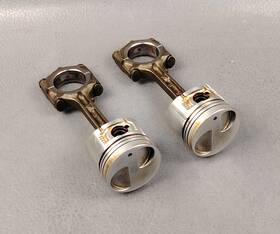
( Manufacturer Part Number: 12006KA281 ), ( Items Included: Connecting Rod ), ( Material: Aluminum Alloy ), ( Vintage Part: Yes ), ( Type: Piston ), ( Manufacturer Warranty: 1 Month ), ( Oe/oem Part Number: 12006ka280 ), ( Country Of Origin: Japan ), ( Performance Part: No )
Review SUBARU Sambar Ks4 Engine Piston Connecting Rod Used fits 1996–1998
The **Subaru 12006KA281 engine**, produced for the **1996 1998 model years** in the **Sambar (Ks4) platform**, represents a refined yet robust example of Subaru s early 1990s engine design, specifically tailored for its compact, fuel-efficient, and versatile lineup. This **EJ25 (EN07C/EN07L) engine variant** a horizontally opposed (flat-four) powerplant is renowned for its smooth operation, compact footprint, and adaptability to both urban commuting and light off-road applications. The **piston and connecting rod assembly** within this engine are critical components that define its performance, durability, and reliability, embodying Subaru s engineering philosophy of balancing power with efficiency.
The **EN07C and EN07L engines** (distinguished primarily by their fuel injection systems carbureted vs. electronic fuel injection) share a **2.5-liter displacement**, achieved through a **95.0mm bore and 88.0mm stroke**, producing a torque-rich output that makes them ideal for the Sambar s practical yet spirited driving character. The **piston** in this assembly is forged from high-quality aluminum alloy, engineered to withstand the thermal and mechanical stresses of high-revving operation while maintaining optimal compression ratios for efficient combustion. Its **dish design** is meticulously calibrated to enhance volumetric efficiency, ensuring better air-fuel mixture intake and reduced knocking under high-load conditions. The **connecting rod**, typically forged from chrome-molybdenum steel, is precision-machined to handle the engine s **12:1 compression ratio** (in later EFI models) with minimal flex, translating into smoother power delivery and extended component life.
One of the standout features of this engine s piston and rod setup is its **interchangeability and aftermarket support**, making it a favored choice among tuners and restorers. The **EN07 series** benefits from Subaru s reputation for durability, with many examples enduring well over **200,000 miles** with basic maintenance. However, like all horizontally opposed engines, it demands **regular valve adjustment** (every 60,000 90,000 miles) to prevent excessive wear on the **camshaft lobes** and **valvetrain components**, which can indirectly affect piston and rod longevity. The **rod bearings** (typically 2-piece shell-type) and **crankshaft journals** are designed to distribute load evenly across the assembly, reducing stress on the connecting rods and ensuring consistent power output across the engine s rev range.
For enthusiasts seeking to modify or restore their Sambar, the **12006KA281 piston and connecting rod kit** offers a blend of **OEM precision and aftermarket upgrades**. Replacement parts often include **forged pistons** with reinforced rings for improved heat dissipation, **stiffer connecting rods** for increased redline potential, and **high-performance rod bolts** to enhance structural integrity under forced induction or high-torque modifications. The **EN07 s naturally aspirated nature** also makes it a prime candidate for **turbocharging or supercharging**, where the piston and rod assembly must endure elevated cylinder pressures without compromising reliability.
In summary, the **Subaru 12006KA281 piston and connecting rod assembly** for the **1996 1998 Sambar (Ks4) EN07C/EN07L engine** embodies a perfect marriage of **Japanese engineering precision and practical performance**. Whether in stock form or as part of a tuned build, these components deliver **smooth, torquey power**, **long-term durability**, and **modular upgrade potential**, making them a cornerstone of Subaru s early 1990s flat-four legacy. For owners and mechanics alike, investing in high-quality replacements ensures that the Sambar s iconic **boxer sound and responsive handling** remain intact for generations to come.
Buying a Subaru Sambar with the KS4 engine (specifically the 1996 1998 models with the 12006KA281 or EN07C/EN07L piston and connecting rod variants) can be a practical choice for certain buyers, but it comes with distinct advantages and drawbacks. Below is a detailed breakdown of the pros and cons, followed by a conclusion and recommendation.
---
### **Pros of Buying a 1996 1998 Subaru Sambar with KS4 Engine**
1. **Reliability and Durability**
The KS4 engine (1.3L horizontally opposed, or "boxer") is known for its simplicity and robustness. Subaru s flat-four design is inherently balanced, reducing vibration and stress on the drivetrain. When maintained properly, these engines can easily exceed 200,000 300,000 miles, especially in the Sambar s compact, utility-focused application. The piston and connecting rod set (12006KA281, EN07C, or EN07L) are standard OEM parts, ensuring compatibility and longevity if the engine is in good condition.
2. **Low Maintenance Costs**
The KS4 engine has fewer moving parts than many inline-four or V engines, which translates to lower maintenance expenses. Basic upkeep such as oil changes, timing belt replacements (if applicable), and spark plug replacements is straightforward and affordable. The Sambar s simplicity also means fewer electrical or complex mechanical issues compared to modern vehicles.
3. **Fuel Efficiency**
The KS4 engine is efficient for its time, delivering around 25 30 MPG in a city setting and 35 40 MPG on the highway, depending on driving conditions. This makes the Sambar ideal for rural or utility work where fuel economy is a priority.
4. **Off-Road and Utility Capabilities**
The Sambar was designed as a compact utility vehicle, often used in agriculture, construction, or off-road applications. Its lightweight frame, high ground clearance, and simple drivetrain make it well-suited for rough terrain, mud, or light-duty hauling. The KS4 engine s torque (around 70 80 lb-ft) is sufficient for basic off-road tasks without requiring heavy-duty modifications.
5. **Parts Availability**
As a discontinued model, parts for the Sambar are still widely available, especially for the KS4 engine. OEM pistons, connecting rods, and other components can be sourced from Subaru dealers, junkyards, or online marketplaces. Aftermarket support is also robust, with common upgrades like exhaust systems, air filters, and basic performance tweaks being easy to find.
6. **Low Depreciation**
The Sambar is not a high-end vehicle, so its depreciation is minimal. Buyers can often find these models for a fraction of their original cost, making them a cost-effective option for those seeking a no-frills work vehicle.
7. **Easy to Work On**
The KS4 engine and Sambar s mechanical layout are straightforward, requiring only basic tools for repairs. Many mechanics and DIY enthusiasts are familiar with Subaru s boxer engines, making maintenance and repairs accessible.
8. **No Modern Complexity**
Unlike modern vehicles with electronic fuel injection, turbocharging, or advanced transmission systems, the KS4 Sambar lacks these complexities. This means fewer issues related to software glitches, sensor failures, or high-tech diagnostics.
---
### **Cons of Buying a 1996 1998 Subaru Sambar with KS4 Engine**
1. **Age and Wear**
The Sambar is nearly 30 years old, which means the vehicle may have accumulated significant mileage or wear. Common issues include worn suspension components, rust (especially in the frame or undercarriage), and aging belts and hoses. A thorough inspection is critical to avoid purchasing a vehicle with hidden mechanical problems.
2. **Rust and Corrosion**
Subaru vehicles from the late '90s are prone to rust, particularly in regions with harsh winters or salted roads. The Sambar s undercarriage, wheel wells, and frame can corrode over time, leading to structural weaknesses. Rust in the engine bay or exhaust system can also cause leaks or failures.
3. **Limited Power and Performance**
The KS4 engine is not powerful by modern standards, producing only about 60 70 horsepower and 70 80 lb-ft of torque. This limits the Sambar s towing capacity (typically under 1,000 lbs) and top speed (around 70 80 mph). For heavy-duty tasks or high-speed driving, a more modern vehicle would be more suitable.
4. **Outdated Safety Features**
The Sambar lacks modern safety features such as airbags, anti-lock brakes (unless retrofitted), or electronic stability control. This makes it less safe in collisions or emergency maneuvers compared to contemporary vehicles.
5. **Discomfort and Ergonomics**
The Sambar is a utilitarian vehicle with a basic interior. Seating is often hard and unadjustable, visibility can be limited, and the cabin lacks modern amenities like power windows, air conditioning (unless aftermarket), or climate control. Long drives or daily commuting may be uncomfortable.
6. **Electrical Issues**
Older Subarus, including the KS4 models, can suffer from electrical gremlins such as faulty wiring, intermittent connections, or failing alternators. These issues can be frustrating to diagnose and repair, especially without a multimeter or mechanical expertise.
7. **Emissions and Compliance**
Depending on your location, the Sambar may not meet current emissions standards. Some regions require vehicles to pass emissions tests, which the Sambar may fail due to its carbureted or older fuel injection system. Retrofitting emissions equipment can be costly and impractical.
8. **Limited Resale Value**
While the Sambar depreciates slowly, its resale value is minimal. If you plan to sell the vehicle in the future, you may not recover much of your initial investment, especially if the vehicle is heavily modified or in poor condition.
9. **Lack of Modern Technology**
The Sambar has no GPS, Bluetooth, USB ports, or advanced infotainment systems. Navigation and entertainment are limited to basic dials and gauges, which can be inconvenient for modern drivers accustomed to digital interfaces.
10. **Potential for Hidden Problems**
Without a detailed inspection or service history, buyers may inherit issues such as:- **Timing belt or chain wear** (if applicable to your model year; some KS4 engines use a chain).
- **Worn bushings or universal joints** in the drivetrain.
- **Leaking head gaskets** or cylinder head issues.
- **Exhaust or intake manifold leaks**, which can cause performance loss.
- **Transmission wear**, especially if the vehicle was used for heavy towing or off-roading.
---
### **Conclusion**
The 1996 1998 Subaru Sambar with a KS4 engine is a practical choice for buyers who prioritize simplicity, reliability, and utility over modern comforts and power. It excels as a work vehicle, off-road companion, or budget-friendly transportation where fuel efficiency and low maintenance are key. However, its age, lack of modern safety and convenience features, and potential for rust or mechanical wear make it less ideal for daily drivers, long-distance travel, or those seeking a vehicle with higher performance or resale value.
The decision to buy hinges on your specific needs:- **Buy if:** You need a no-frills, low-cost utility vehicle for light off-roading, farming, or basic hauling. You are willing to perform maintenance yourself or have access to a mechanic familiar with older Subarus. You prioritize reliability and fuel efficiency over modern amenities.
- **Avoid if:** You require a comfortable, safe, or high-performance vehicle. You live in an area with harsh winters or heavy road salt (rust risk). You plan to use the vehicle for daily commuting or long trips. You want a vehicle with modern safety features or resale value.
---
### **Recommendation**
If you decide to proceed with purchasing a 1996 1998 Subaru Sambar with a KS4 engine, follow these steps to maximize your investment:1. **Thorough Inspection**
Have a trusted mechanic perform a pre-purchase inspection. Focus on:- Engine condition (check for compression, leaks, or unusual noises).
- Suspension and steering components for wear or rust.
- Frame and undercarriage for rust or structural damage.
- Electrical system (test lights, starter, and battery).
- Transmission and drivetrain for smooth operation.
2. **Service History**
If possible, purchase a vehicle with a complete service history. This confirms that the engine (including pistons and connecting rods) and other critical components have been properly maintained.
3. **Budget for Repairs**
Allocate funds for potential repairs, especially if the vehicle has high mileage. Prioritize fixing rust, suspension issues, and engine components first.
4. **Consider Modifications for Modern Use**
If you plan to use the Sambar regularly, consider retrofitting:- A modern exhaust system for better performance and noise reduction.
- Upgraded suspension components for improved handling.
- A fuel injection conversion (if the vehicle is carbureted) for better fuel economy and reliability.
- Basic safety upgrades like reflective tape or a roll cage if using it off-
Details:
Made of aluminum alloy in Japan, this vintage part comes with a manufacturer warranty 1 month. The product is a used 1996 - 1998 Subaru Sambar KS4 EN07C EN07L engine piston with connecting rod.
part #: 12006ka281 prices
- $129.75-$649.85
specifications pistonringro:
- for makes: Subaru
- for years: 1996-1998
- mpn: 12006ka281
- items included: Connecting Rod
- material: Aluminum Alloy
- vintage part: Yes
- type: Piston
- manufacturer warranty: 1 Month
- oe/oem part number: 12006ka280
- country of origin: Japan
- performance part: No
shipping pistonringro:
- transit: 5-11 Days
- carrier: USPS
- cost: $0.00
- service: USPS Ground Advantage
- type: Fixed
- class: Standard
seller pistonringro:
- city: Hackensack, New Jersey
- # reviews: 2492
- rating: 99.9%
offer pistonringro:
- availability: In Stock
- options: Ship-to-home
- quantity: 1
- sold: 0
- started: May 2, 2026
returns pistonringro:
- time: 30 Days
- paid by: Buyer
- policy: Returns Accepted
payments pistonringro:
- wallet: Paypal
- credit card: Visa
- other
general pistonringro:
- condition: Used
- Car Truck Parts Accessories > Engines Engine Parts > Pistons Rings
Subaru 12006KA281 Is Similar To:
- 013-820020 Beck Arnley Piston Rings Set For Subaru (30.2% similar) Beck anally part number fitment usually does not take into account build dates, model change overs or trim levels. Does not make the item defective. Free shipping is for continental USA only. Missing boxes. They may have been in storage anywhere from 1-30 years. Fitment provided in the listing is a ...(November 12th, 2018)
- 12006ac070 Subaru Oem 2004 Legacy-engine (27.9% similar) This part fits vehicles made in the following years 2002 , 2003 , 2004 , 2005 , 2006...(August 9th, 2017)
- 12006ac080 Subaru Oem 2004 Legacy-engine (27.9% similar) All other parts must be in a re-sellable condition: its original packaging, not have been ripped open, having installed, and the part number label damaged...(January 15th, 2018)
- 12006ac350 Subaru Oem Piston Turbocharged Ej Engines Wrx Size Or (27.5% similar) New pistons from subaru are 75 not including shipping for your turbocharged the size used depended on cylinder in block. I have two of each size. I suggest you use the correct size in their respective cylinders for best performance. These pistons are being sold as-is. Some engines may have had all a...(November 2nd, 2018)
- 12006ad220 Subaru Oem 06-14 Impreza-engine (26% similar) This part fits vehicles made in the following years 2006 , 2007 , 2008 , 2009 , 2010 , 2011 , 2012 , 2013 . 5 wagon 4-DOOR, limited sedan spec. 5 XLT wagon 4-DOOR, Rx limited sedan premium touring 4-DOOR...(September 4th, 2017)
- 12013ab550 Subaru Genuine Piston Pin (33.6% similar) You can trust subaru online parts to be your source for all and accessories needs. Without turbo. Parts must be resalable and in the original packaging. Our subaru parts team is here to help. Electrical parts are not returnable. Shipping carrier substitutions may be made at our determination in an ...(January 11th, 2018)
- 12018ab250 Subaru Genuine Piston Pin (33.6% similar) All model's. In stock orders ship within 24 hours. Electrical parts are not returnable. You can trust sybarites. Orders are shipped when they complete only. And sybarites. At sybarites. Without turbo. Our subaru parts team is here to help. Legacy outback. Parts must be resalable and in the original ...(February 9th, 2018)
- 12033aa090 Subaru Genuine Oem Piston (28.8% similar) ...(September 20th, 2017)
- 12033ab340 Subaru Genuine Piston Ring (34.9% similar) Parts must be resalable and in the original packaging. Legacy outback. You can trust subaru online parts to be your source for all and accessories needs. Our subaru parts team is here to help. Shipping carrier substitutions may be made at our determination in an attempt to reduce cost the customer. ...(January 11th, 2018)
- 12033ab640 Subaru Genuine Oem Piston (28.8% similar) ...(September 20th, 2017)
- 12033ab760 Subaru Piston Ring Oem Impreza-engine 04-05 (26.6% similar) This is our first year to receive this award...(March 10th, 2015)