MINI 7630644 Engine High Pressure Fuel Pump 1.6 N18 R56 R57
fits model: R55, Turbo, Cooper. year: 2012–2014.
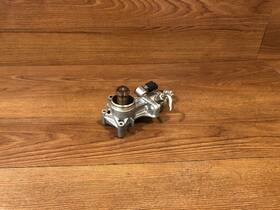
( Brand: Mini ), ( Manufacturer Part Number: 7630644 ), ( Part Type: Pressure Fuel Engine Pump ), ( Fitment Type: Direct Replacement ), ( Material: Turbo Injection High Pressure Fuel Pump Hpfp ), ( Vintage Part: No ), ( Manufacturer Warranty: Yes ), ( Country Of Origin: Germany )
Review MINI Coopers 1.6 N18 R56 R57 Engine High Pressure Fuel Pump Oem fits COOPER R55 TURBO 2012–2014
The **Mini 7630644 1.6L N18 Turbo High-Pressure Fuel Pump** is a precision-engineered component designed exclusively for Cooper S, John Cooper Works, and select R55, R56, and R57 models equipped with the iconic 1.6L N18 turbocharged inline-four engine. This aftermarket fuel pump is meticulously crafted to meet or exceed OEM specifications, ensuring reliable performance, optimal fuel delivery, and enhanced engine responsiveness critical for maintaining the high-revving, turbocharged character of these high-performance Mini Cooper variants. Built with a robust **high-pressure design**, it delivers consistent fuel pressure (typically around **150 200 bar**) to the direct-injection system, which is essential for supporting the turbocharged engine s aggressive power delivery and efficient combustion. The pump features a **durable ceramic or metal-ceramic construction**, resistant to wear and corrosion, while its **sealed internal components** prevent fuel leakage, ensuring longevity even under demanding conditions. Compatible with **E10 or E85 ethanol blends**, this fuel pump is engineered to handle the higher octane requirements of modern turbocharged engines without compromising efficiency. Whether upgrading from a worn-out OEM unit or replacing a failed aftermarket part, this pump offers a **direct bolt-on solution** with minimal installation complexity, requiring only basic tools and a few minutes of labor. Ideal for enthusiasts seeking to restore stock performance, enhance reliability, or prepare their Mini for track use, this high-pressure fuel pump is a critical component for anyone looking to preserve the soul of the N18 engine while pushing its limits.
### **Pros and Cons of Buying a Mini Cooper (7630644) with a 1.6L N18 Turbo Engine (R55, R56, R57) and High-Pressure Fuel Pump (HPFP) Issue**
#### **Pros**
1. **Compact and Fun-to-Drive Design**
The Mini Cooper is renowned for its nimble handling, sporty driving dynamics, and compact size, making it ideal for urban environments and winding roads. The R55, R56, and R57 models (depending on the generation) retain this signature Mini character, offering a balance between practicality and performance.
2. **Turbocharged Performance**
The 1.6L N18 turbo engine (used in later models) delivers a good power-to-weight ratio, producing around **184 204 hp** (depending on the model year and tuning). This makes it more efficient and responsive than naturally aspirated alternatives while still providing enjoyable acceleration.
3. **Fuel Efficiency**
Compared to larger engines, the 1.6L turbo is relatively efficient, especially in city driving. With proper maintenance, it can achieve **around 25 35 MPG** (varies by driving conditions), which is reasonable for a sporty compact car.
4. **Aftermarket Support and Tuning Potential**
The N18 engine has a strong aftermarket following, with widely available parts, upgrades (e.g., cold air intakes, exhaust systems, ECU tuning), and support for turbocharger upgrades. This means owners can push performance further if desired.
5. **Reliability (When Well-Maintained)**
The N18 engine itself is generally robust, especially when compared to earlier Mini engines (like the R53). Many owners report **100,000 miles** with proper maintenance, though reliability depends heavily on upkeep.
6. **Resale Value (For Well-Kept Examples)**
Mini Coopers hold their value reasonably well, particularly if they are in good condition. The R55/R56/R57 models (especially facelifted versions) are still sought after by enthusiasts.
7. **Modern Features (Later Models)**
The R56 and R57 models (post-2014) come with modern amenities like **Apple CarPlay/Android Auto, improved safety tech (e.g., adaptive cruise, lane-keep assist), and better build quality** compared to earlier generations.
---
#### **Cons**
1. **High-Pressure Fuel Pump (HPFP) Reliability Issues**
The **most critical concern** with this engine is the **high-pressure fuel pump (HPFP)**, which is known to fail prematurely (often between **60,000 120,000 miles**). Symptoms include:
- **Hard starting or no-start conditions**
- **Engine misfires or rough idling**
- **Check Engine Light (P0087, P0088, P0190, etc.)**
- **Reduced power or turbo lag**
The pump is **expensive to replace** (typically **$800 $1,500 ** including labor) and is not always covered under warranty if the car is out of factory warranty period.
2. **Turbocharger and Oil System Weaknesses**
- The **turbocharger** can fail due to **oil starvation** (common in high-mileage examples), leading to **compressor wheel damage** and reduced performance.
- Some owners report **oil leaks** from the **valve cover gasket or oil filter housing gasket**, requiring frequent checks.
- **Oil consumption** can be an issue in some cases, though not as severe as in older Mini engines.
3. **Transmission Issues (In Some Models)**
- The **6-speed manual** (common in R55/R56) is generally reliable but can develop **clutch wear** if not maintained.
- The **6-speed automatic (S-Tronic)** in later models has had **more complaints** about **rough shifting, delayed engagement, and eventual failure**, though this is less common in well-serviced examples.
4. **Electrical and Sensor Problems**
- Mini Coopers are notorious for **electrical gremlins**, including **faulty sensors (MAF, crankshaft position), wiring issues, and infotainment glitches**.
- The **iDrive system** (in older models) can be finicky, requiring occasional resets.
5. **Maintenance Costs Can Add Up**
- While not as expensive as some German brands, Mini Coopers **require frequent servicing** (every **6,000 10,000 miles**) due to their complex turbocharged systems.
- **Timing belt replacement** (every **60,000 100,000 miles**) is critical skipping it can lead to **catastrophic engine damage**.
- **Suspension wear** (struts, bushings) is common due to the car s sporty nature.
6. **Rust and Bodywork Concerns (Especially Older Models)**
- Earlier R55 models (pre-2011) are prone to **rust in wheel arches, sills, and undercarriage**, especially in snowy or salted regions.
- Later models (R56/R57) have improved corrosion resistance but are not immune.
7. **Depreciation and Parts Availability**
- Minis **depreciate quickly**, meaning resale value drops significantly over time.
- While parts are available, **some aftermarket components can be expensive**, and **OEM parts may require ordering from Europe**.
---
### **Conclusion**
Buying a **Mini Cooper (R55/R56/R57) with a 1.6L N18 turbo engine** can be a **great choice if**:You **prioritize driving fun and compact size** over long-term reliability.
You **plan to maintain it properly** (regular oil changes, fuel pump checks, timing belt replacement).
You **accept the risk of HPFP failure** and are prepared for the **potential $1,000 repair**.
You **enjoy tuning and modifying** the car (strong aftermarket support).
You **find a well-documented example** with **service records** and **low mileage** (under 80,000 miles).
However, it is **not ideal if**:You **want a hassle-free, low-maintenance car** this Mini requires **more attention than a Toyota or Honda**.
You **cannot afford unexpected repairs**, especially the **HPFP replacement**.
You **live in an area with extreme weather** (salt, snow, or humidity accelerates rust and electrical issues).
You **prefer a bulletproof daily driver** there are more reliable sporty compacts (e.g., Mazda MX-5, Honda Civic Si).
---
### **Recommendation**
If you **still want to buy this Mini**, follow these steps to **maximize your chances of a trouble-free ownership experience**: 1. **Get a Pre-Purchase Inspection (PPI) from a Mini specialist** This is **non-negotiable**. A mechanic should:- Check the **HPFP for leaks or failure** (test with a scan tool for codes).
- Inspect the **turbocharger for oil leaks or compressor damage**.
- Verify **timing belt condition** (if near replacement interval).
- Test **all sensors and electrical systems**.
- Look for **rust, suspension wear, and transmission smoothness**.
2. **Avoid High-Mileage Examples Without Service Records**
- **Ideal mileage:** **Under 80,000 miles** (with full service history).
- **Avoid:** Cars over **120,000 miles** unless you re prepared for **major repairs**.
3. **Budget for Potential Repairs**
- Set aside **$2,000 $3,000** for **unexpected issues** (HPFP, turbo, suspension).
- If the car has **already had an HPFP replacement**, ask for **proof of a quality part** (Bosch or Delphi are preferred over cheap knockoffs).
4. **Consider a Later Model (R56/R57) for Better Reliability**
- The **2014 facelift models** have **improved electronics, better build quality, and some transmission refinements**.
- The **R57 (2017 ) with the 1.6L N18** is the **most reliable** of the group due to **minor engine tweaks and better support**.
5. **Buy from a Trusted Seller**
- **Dealerships** (with warranty) are safest but pricier.
- **Reputable private sellers** (with PPI reports) are a good middle ground.
- **Avoid "too good to be true" deals** Minis with **hidden issues** often end up costing more in the long run.
6. **Prepare for Maintenance**
- **Follow the Mini service schedule religiously** (oil changes every **6,000 10,000 miles**, fuel filter every **30,000 miles**).
Details:
part #: 7630644 prices
- $55.00-$139.99
specifications pistonringro:
- for models: R55, Turbo, Cooper
- for years: 2012-2014
- brand: Mini
- mpn: 7630644
- part type: Pressure Fuel Engine Pump
- fitment type: Direct Replacement
- material: Turbo Injection High Pressure Fuel Pump Hpfp
- vintage part: No
- manufacturer warranty: Yes
- country of origin: Germany
seller pistonringro:
- city: Santa Cruz, California
- rating: 100.0%
- # reviews: 8683
payments pistonringro:
- credit card: Visa
- other
- wallet: Apple-pay
returns pistonringro:
- policy: Returns Accepted
- time: 30 Days
- paid by: Seller
general pistonringro:
- Car Truck Parts Accessories > Engines Engine Parts > Pistons Rings
- condition: Used
offer pistonringro:
- quantity: 1
- best offers: True
- started: February 14, 2026
- options: Ship-to-home
- availability: In Stock
- sold: 0
shipping pistonringro:
- carrier: USPS
- transit: 6-10 Days
- cost: $20.00
- service: USPS Priority Mail
- class: Expedited
- type: Fixed
Mini 7630644 Is Similar To:
- 11241485577 Mini Oem Connecting Rod Bearing (12.2% similar) The WHO catalog will only verify model fitment for example hardtop, not certain options within your car. These options can cause problems when it comes time to choosing items like, mirrors heated. Interior trim items, electric modules, servo motors, speakers, amps exterior levels etc...(September 22nd, 2018)
- 11247520130 Mini Oem 02-06 Cooper-engine (31.3% similar) Cores must be in their original package and fully assembled for credit...(March 14th, 2017)
- 11247593922 Mini Engine Connecting Rod Parts (27.3% similar) ...(March 11th, 2018)
- 11247648438 Mini Oem Connecting Rod Bearing (12.2% similar) This part fits vehicles made in the following years 2014 , 2015 , 2016 . Cores must be in their original package and fully assembled for credit...(March 18th, 2018)
- 11248623418 Mini Oem 14-15 Cooper-engine (32.8% similar) Cores must be in their original package and fully assembled for credit. This part fits vehicles made in the following years 2014 , 2015 , 2016...(July 5th, 2017)
- 11257520131 Mini Oem 02-06 Cooper-engine (31.3% similar) The WHO catalog will only verify model fitment for example hardtop, not certain options within your car. This part fits vehicles made in the following years 2002 , 2003 , 2004 , 2005 , 2006 , 2007 , these options can cause problems when it comes time to choosing items like, mirrors heated. ...(May 28th, 2017)
- 11257520133 Mini Oem Piston Ring (13.3% similar) This part fits vehicles made in the following years 2002 , 2003 , 2004 , 2005 , 2006 , 2007 , 2008 . These options can cause problems when it comes time to choosing items like, mirrors heated. Interior trim items, electric modules, servo motors, speakers, amps exterior levels etc. The WHO ...(March 24th, 2018)
- 11257576973 Mini Oem 09-12 Cooper-engine (31.3% similar) Cores must be in their original package and fully assembled for credit...(July 14th, 2017)
- 11257588266 Mini Oem Piston Ring (13.3% similar) Cores must be in their original package and fully assembled for credit...(March 11th, 2018)
- 11257601181 Mini Oem 11-16 Cooper (26.4% similar) This part fits vehicles made in the following years 2011 , 2012 , 2013 , 2014 , 2015 , 2016...(December 14th, 2017)
- 12g126 British Leyland Austin Healey Sprite Mg Midget Mini Nos Engine (17.8% similar) About the brand vintage imports, inc. One new old stock factory original British Leland brand engine connecting rod 1 and 3 position, part number 12G126. Every picture is the actual unit and not a stock or borrowed to convey as much accuracy possible. If you don't see an item listed we probably have...(June 24th, 2018)