DNJ P4307 Standard Piston Gdi 1.6L
fits model: Turbo. make: Hyundai, Kia. year: 2013–2020.
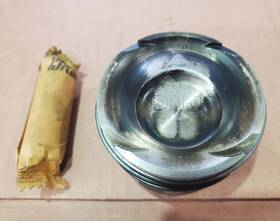
( Brand: Dnj ), ( Manufacturer Part Number: P4307 ), ( Part Type: Piston ), ( Country Of Origin: Indonesia )
Review DNJ Standard Size Piston Hyundai Kia 1.6l Gdi fits TURBO 2013–2020
The **Dnj P4307 Standard Piston for 13-20 Hyundai/Kia 1.6L GDI Turbo** is a precision-engineered aftermarket component designed to restore peak performance and reliability to the turbocharged Gamma (G4KD) engine family found in popular Hyundai and Kia models from 2013 to 2020. Crafted from high-grade **forged aluminum alloy**, this piston is meticulously machined to meet or exceed OEM specifications, ensuring optimal compression ratios, reduced risk of detonation, and enhanced durability under the demanding conditions of forced induction. The **standard profile** of the piston featuring a smooth, unmodified crown makes it an ideal choice for drivers seeking a straightforward upgrade without the added complexity of a dish or dome design, which can alter combustion dynamics. Engineered to withstand the elevated cylinder pressures generated by turbocharging, the P4307 is reinforced with **stress-relieved ribs and a robust wrist pin boss**, minimizing the risk of catastrophic failure during high-load scenarios such as aggressive throttle applications or sustained high-RPM operation. Compatible with the **1.6L GDI turbo engine** found in vehicles like the Hyundai Elantra GT, Kia Forte GT, and Hyundai Accent GT, this piston is a direct replacement for the stock unit, ensuring a seamless fit with minimal modifications required to the engine bay. Whether installed as part of a routine maintenance overhaul or as part of a performance-oriented rebuild, the Dnj P4307 delivers a balance of strength, precision, and cost-effectiveness, making it a trusted choice for both enthusiasts and professional mechanics aiming to preserve or enhance the longevity and efficiency of their turbocharged engine.
**Pros and Cons of Buying a Denso P4307 Standard Piston for a 1.6L GDI Turbo Engine (Hyundai/Kia, 2013 2020)**
### **Pros**
1. **OEM Quality and Compatibility** The Denso P4307 is an original equipment (OEM) or high-quality aftermarket piston designed specifically for the 1.6L GDI turbo engine found in Hyundai and Kia models from 2013 to 2020. This ensures a precise fit, reducing the risk of clearance issues or premature wear.
2. **Durability and Performance** Denso pistons are known for their robust construction, often featuring forged or high-strength materials that improve longevity and resistance to heat and stress. This can help prevent catastrophic engine failure, especially in turbocharged applications where thermal and mechanical loads are higher.
3. **Compatibility with Turbocharged Applications** The 1.6L GDI turbo engines in these vehicles are prone to piston ring sticking, carbon buildup, and thermal expansion issues due to forced induction. A standard piston like the Denso P4307 is designed to handle these conditions better than stock pistons, which may be more prone to failure under boosted loads.
4. **Warranty and Reliability** Denso is a reputable brand with a strong reputation for quality control. Many aftermarket pistons come with warranties, and Denso s products are often backed by reliable customer support, reducing the risk of purchasing a defective part.
5. **Potential for Improved Engine Reliability** If the engine has been running with worn or damaged pistons, replacing them with a Denso P4307 can restore proper compression, reduce oil consumption, and prevent piston-to-wall contact, which is a common failure mode in turbocharged engines.
6. **Ease of Installation** Since this is a standard piston replacement (not a custom or oversized part), installation is straightforward for a skilled mechanic. It requires removing the engine, replacing the pistons, and reassembling, but no major modifications are needed.
---
### **Cons**
1. **Cost** High-quality pistons like the Denso P4307 are more expensive than generic or low-end aftermarket alternatives. The price can range from $100 to $300 per piston, depending on the source and whether they are new or refurbished. This adds to the overall rebuild cost, which can be significant for a turbocharged engine.
2. **Labor-Intensive Replacement** Replacing pistons requires a full engine teardown, which includes removing the engine from the vehicle, disassembling the crankshaft, connecting rods, and cylinder head, and then reassembling everything. This is a labor-intensive process that can take 10 20 hours or more, depending on the mechanic s experience.
3. **Risk of Other Hidden Issues** If the engine has been running with damaged pistons, there may be secondary damage to the crankshaft, connecting rods, cylinder walls, or turbocharger. A piston replacement alone may not solve all problems, and additional repairs (e.g., crankshaft balancing, cylinder honing, or turbo replacement) could be necessary, increasing costs.
4. **Potential for Overkill** If the engine failure was caused by something other than piston wear (e.g., oil starvation, turbo failure, or poor maintenance), replacing just the pistons may not address the root cause. For example, if the turbo failed and caused piston damage, fixing the turbo and related issues (like oil leaks) is equally important.
5. **Limited Longevity Without Supporting Repairs** Pistons alone do not guarantee long-term reliability. If the engine has been neglected (e.g., low oil changes, lack of cooling system maintenance, or excessive boost without proper tuning), the pistons may still fail prematurely unless the entire engine is rebuilt or upgraded with supporting components (e.g., upgraded oil pump, cooler, or turbo).
6. **Market Availability and Lead Times** While Denso pistons are widely available, there may be delays in ordering, especially if the part is discontinued or requires special ordering. This can extend the downtime for your vehicle.
---
### **Conclusion**
The Denso P4307 standard piston is a **high-quality, reliable choice** for replacing worn or failed pistons in a 1.6L GDI turbo engine from Hyundai or Kia (2013 2020). It offers superior durability, compatibility, and performance compared to lower-quality alternatives, making it a worthwhile investment if the engine has suffered piston-related damage. However, the decision to replace pistons should be part of a **comprehensive engine rebuild or repair plan**, as pistons alone may not resolve all underlying issues.
If the engine has been running with boost and showing symptoms like blue smoke, knocking, or oil consumption, replacing the pistons with a Denso part is a **strong recommendation** to restore reliability and prevent catastrophic failure. However, if the engine has other known issues (e.g., turbo failure, oil leaks, or severe wear in other components), those should be addressed simultaneously to ensure long-term performance.
---
### **Recommendation**
1. **If the engine has failed due to piston damage (e.g., scored cylinders, broken rings, or seized pistons):** - **Proceed with the Denso P4307 pistons** as part of a full engine rebuild. Pair this with:- New cylinder honing or sleeving if the cylinders are worn.
- Replacement of piston rings, oil pump, and turbocharger if damaged.
- Fresh gaskets, seals, and cooling system components.
- Use a **high-quality oil (5W-30 or 5W-40 synthetic)** and consider an **oil cooler** if the engine runs hot.
- Have a **mechanic with turbocharged engine experience** perform the rebuild to ensure proper assembly.
2. **If the engine is running but showing signs of piston wear (e.g., compression loss, oil burning, or knocking under load):**- **Get a compression test and oil consumption analysis** to confirm piston damage.
- If pistons are confirmed worn, replace them with Denso P4307 pistons **along with new rings and a thorough inspection of the turbo and cooling system**.
- Avoid running the engine with boost until the rebuild is complete to prevent further damage.
3. **If the engine failure was due to something other than pistons (e.g., turbo failure, oil starvation, or poor maintenance):**- **Prioritize fixing the root cause** (e.g., replacing the turbo, fixing oil leaks, or upgrading the cooling system) before replacing pistons.
- If pistons are already damaged, replace them with Denso parts **as part of a broader repair plan**, but do not rely solely on pistons to "fix" the engine.
4. **Budget Considerations:**- If cost is a major concern, consider **refurbished Denso pistons** (if available) or other high-quality brands like **Mahle, JE, or Fel-Pro**, though Denso is generally the safest choice for OEM-level performance.
- If the engine is old or the vehicle has high mileage, weigh the cost of a rebuild against the value of the car. In some cases, a **turbo swap or engine replacement** (e.g., with a used but reliable 2.0L or 2.5L engine) may be more cost-effective.
**Final Verdict:** The Denso P4307 is a **strong, reliable choice** for piston replacement in this engine family, but it should be part of a **comprehensive repair strategy** rather than a standalone fix. If you re committed to restoring the engine s health, investing in Denso pistons (along with supporting components) is a smart decision. If the vehicle s value is low or the engine is severely compromised, consult with a mechanic to determine whether a rebuild is worth the cost.
Details:
Floating wrist pin. DNJ P4307 Standard size Piston For 13-20 Hyundai Kia 1.6L GDI Turbo, you'll receive, 1 piston w/pin. Used like new.
part #: p4307 prices
- $167.19-$999.99
specifications pistonringro:
- for models: Turbo
- for makes: Hyundai, Kia
- for years: 2013-2020
- brand: Dnj
- mpn: P4307
- part type: Piston
- country of origin: Indonesia
shipping pistonringro:
- carrier: UPS
- cost: $0.00
- service: UPS Ground
- class: Standard
- transit: 4-8 Days
- type: Fixed
general pistonringro:
- Car Truck Parts Accessories > Engines Engine Parts > Pistons Rings
- condition: Used
payments pistonringro:
- credit card: Mastercard
- wallet: Paypal
- other
offer pistonringro:
- availability: In Stock
- options: Ship-to-home
- started: February 20, 2026
- best offers: True
- quantity: 4
- sold: 0
returns pistonringro:
- paid by: Seller
- policy: Returns Accepted
- time: 30 Days
seller pistonringro:
- rating: 100.0%
- city: Mobile, Alabama
- # reviews: 508
Dnj P4307 Is Similar To:
- 91654 Dnj Engine Components Piston Ring Set (30.9% similar) This item is new and in box. Please see photos for more details and further item specifics...(September 26th, 2018)
- Pr602 Dnj Engine Components Piston Ring Set Fits 1985-1989 Nissan D21 720 Van Rock Products Dnj Engi 41462 (31.2% similar) 24X7 online. All products are covered by manufacturer's warranty...(July 30th, 2016)
- Pr4150 Dnj Engine Components Piston Ring Set Fits 1992-2008 Mercury Grand Marquis Cougar Mounta (30.9% similar) The item specifics section also contains important details. Rock products Dnj engine components supplied your vehicles manufacturer with the engine piston rings. This part fits vehicles made in the following years 1991 , 1992 , 1993 , 1994 , 1995 , 1996 , 1997 , 1998 , 1999 , 20 2001 , ...(January 10th, 2016)
- Pr3147 Dnj Engine Components Piston Ring Set Fits 1996-2003 Pontiac Grand Prix Am Rock Products 41865cp (34.1% similar) All products are covered by manufacturer's warranty. This part fits vehicles made in the following years 1996 , 1997 , 1998 , 1999 , 20 2001 , 2002 , 2003 , 2004 , 2005 , 2006 , 2007 , 2008 , 2009 . 24X7 online...(August 7th, 2016)
- Pr614 Dnj Engine Components Piston Ring Set Fits 2000-2006 Nissan Sentra Rock Products Dnj Eng (31.1% similar) Rock products Dnj engine components supplied your vehicles manufacturer with the engine piston rings. This part fits vehicles made in the following years 20 2001 , 2002 , 2003 , 2004 , 2005 , 2006...(July 17th, 2016)
- Pr917 Dnj Engine Components Piston Ring Set Fits 2001-2007 Toyota Highlander Camry Solara Rock (28.6% similar) This part fits vehicles made in the following years 2001 , 2002 , 2003 , 2004 , 2005 , 2006 , 2007 . All products are covered by manufacturer's warranty. 24X7 online...(August 11th, 2016)
- Pr262 Dnj Engine Components Piston Ring Set Fits 2004-2007 Saturn Vue Rock Products Dnj (31.2% similar) Stock is updated nightly, so it is possible that an item shows in stock but was already sold. The item specifics section also contains important details. Rock products Dnj engine components supplied your vehicles manufacturer with the engine piston rings...(March 13th, 2016)
- 2.7l-v6 P524 Dnj Engine Components Piston Set Fits 02-06 Suzuki Xl-7 (31.1% similar) Engine piston set Dnj P524 fits Suzuki XL 7 you won't be disappointed. Our team of certified car quest counter pros are Best in the biz. So forget the rest and try Best...(May 29th, 2016)
- 3.0l-v6 P470 Dnj Engine Components Piston Set Fits 89-93 Mazda Mpv (30.1% similar) As in the parts does not match the picture or the wrong parts was shipped including items deemed incorrectly boxed. Substituted parts of same or better quality will not be deemed our fault. The bags are clear so you can view and inspect the item. Pistons, rings, oil pumps, water pumps, valves, ...(March 17th, 2016)
- 5.8l-v8 P4188 Dnj Engine Components Piston Set 88-96 Ford E-350 F-250 F-350 W Rings (34.7% similar) I paid a couple hundred bucks for these on rock auto, and I know from friends that Dnj stuff is very good quality for the money. Piston set with rings included. To clarify, you get the full set of pistons, part P4188 along with the full ring set part PR3103A. I bought these to rebuild my '94 F250 8w...(January 17th, 2016)
- P1145a Dnj Engine Components Piston Set (28.3% similar) Substituted parts of same or better quality will not be deemed our fault. The bags are clear so you can view and inspect the item. This part fits vehicles made in the following years 1996 , 1997 . Pistons, rings, oil pumps, water pumps, valves, lifters, engine bearings, freeze plugs, timing belts...(December 31st, 2015)